
Travel Classics West | Santa Fe 2026
What Editors Want Now: Ten Takeaways for Writers
November 5–8, 2026 · Eldorado Hotel & Spa, Santa Fe, New Mexico
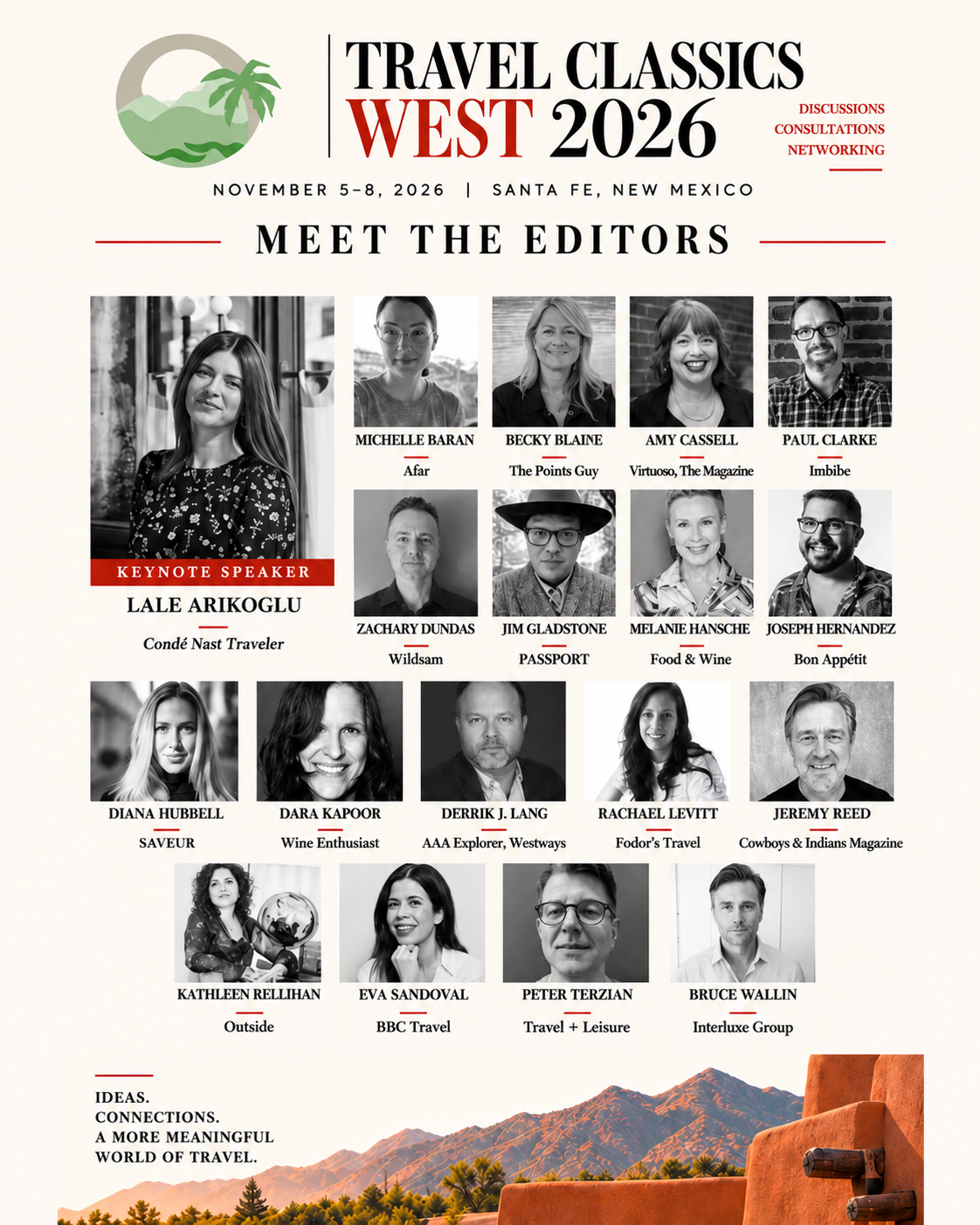
The editors of Santa Fe 2026. Click to view full size.
The Big Shift
In the age of AI, editors are putting an even higher premium on original reporting, distinctive voices, human connections and firsthand experiences. The best travel stories are not generic destination overviews; they reveal something only you could discover and share.
1
Lead with voice, be the writer only you can be.
A personal perspective and lived experience can be as compelling as subject-matter expertise. Rachael Levitt (Fodor’s Travel) wants stories rooted in something that actually happened to the writer; Kathleen Rellihan (Outside) encouraged writers to be more voice-driven.
2
Go beyond the destination and find the story within the story.
Lose the familiar sightseeing checklist and dig for the cultural detail, tradition or subculture that reveals a place. Eva Sandoval (BBC Travel) looks for the “third layer” beyond the expected “mountains or nightlife”; Bruce Wallin (Interluxe Group) urged writers to find a new angle on a familiar destination.
3
Put human connection at the center.
Strong travel stories have characters, feeling and discovery. Jim Gladstone (PASSPORT) wants readers to learn alongside the writer and feel the emotion of an experience. Dara Kapoor (Wine Enthusiast) looks for a human angle and a subculture that connects to how people live today.
4
Bring expertise… and know when to borrow it.
Writers need not be authorities on everything, but they must know the right questions to ask and the right sources. Eva Sandoval values authority in a destination, a subject or the art of storytelling. Bruce Wallin noted that category expertise makes a writer someone an editor knows to call for a specific story.
5
Use AI for process, not for your voice or reporting.
Editors repeatedly rejected AI-written pitches and stories. Diana Hubbell (SAVEUR) cautioned that tools cannot replace interviews and verification; Paul Clarke (Imbibe) warned, “Don’t outsource your heart and brain to AI.” Human observation and source-building are more important than ever.
6
Make familiar places feel surprising again.
Seek overlooked communities, unusual access and characters that transform a well-covered destination. Melanie Hansche (Food & Wine) values local knowledge and off-the-beaten-path discoveries; Diana Hubbell wants the distinctive person or pursuit that no standard guide would surface.
7
Let curiosity drive the story — and do the legwork.
Press trips can provide access, but they do not replace independent reporting. Joseph Hernandez (Bon Appétit) urged writers to “get out from behind the desk”; Paul Clarke encouraged conversations with bartenders and winemakers, and Diana Hubbell urged attention to smaller places beyond the PR circuit.
8
Know the publication and its audience.
Before pitching, read the outlet closely and understand what its readers are looking for. Jeremy Reed (Cowboys & Indians) advised visiting a bookstore and reading the magazine. For Zachary Dundas (Wildsam), RV owners may be the audience but “all wandering matters.” Additionally, Becky Blaine (The Points Guy), Amy Cassell (Virtuoso) and Derrik Lang (AAA titles) all shared how audience needs shape editorial choices and how much the actual craft of writing still matters.
9
Make your pitch easy to champion.
Pitch a clear angle, working headline, why your story matters now and why you are the right person to tell it. Several editors reminded us that they need to pitch your ideas internally. Keep your pitch concise, demonstrate reporting chops and name your sources. As Eva Sandoval put it, “the more work you put into your pitch, the less will need to go into the writing.”
10
Tell a great story across evolving and expanding platforms.
Print still matters, but publishers increasingly connect with audiences through video, newsletters, podcasts, Substack, events and social platforms. Peter Terzian (Travel + Leisure) discussed how the brand has expanded beyond the magazine; Michelle Baran (Afar) and Lale Arikoglu (Condé Nast Traveler) emphasized the value of original imagery. Words are still hero but visual content has increasing value — and it’s a value editors agree you should be compensated for if you provide it.
The Bottom Line
The strongest travel stories aren’t necessarily about where you went. They’re about what you discovered, who you met, why it matters and what only you can bring to the story. Original reporting, a distinctive voice, attention to craft and a fresh perspective are what will make you stand out.
Prepared by Kerry Lyons
Media and Marketing Lead, Travel Classics